
Home / The Technology
The RuBee Academy
The Physics of a Wireless
That RF Can't Imitate
Drill-down technical background on RuBee: how magnetic communication works, why it achieves 100% read accuracy in harsh environments, and why it is uniquely human-safe, intrinsically safe, and physically secure.
RuBee 101
RuBee operates at low frequency — 131 kHz, a wavelength of 2,289 meters, about 1.25 miles. Unlike LF, HF, or UHF RFID, RuBee is an on-demand, packet-based protocol, similar in concept to WiFi, Bluetooth, or Zigbee. Every RFID tag — active or passive — is a transponder that reflects radio signals. RuBee tags are different: each is a transceiver, like a two-way radio, except it communicates with magnetic waves rather than radio waves.
A RuBee tag is a small computer. It has a crystal and keeps time. It has a battery, a CPU, and static memory. It can carry sensors and log their data. And because it operates at such a low frequency, it sips power — a simple lithium coin cell lasts 5 to 25 years in the field, with a read range of 1 inch to 50 feet.
Barcodes and RF are line-of-sight technologies: paper, plastic, buildings, water, people, and steel all block or reflect them. RuBee antennas produce 3D volumetric magnetic fields that pass through steel and water. Tags are read anywhere in a volume — no aiming, no orientation, no line of sight — which means real-time visibility with no change in process for the people doing the work.
Inside the tag: a crystal clock, CPU, static memory, and a coin cell that lasts 5–25 years — a small computer, not a transponder.
RuBee vs RF at a Glance
- Spectrum
- Magnetic (H-field), 131 kHz
- Tag type
- Active transceiver with CPU + clock
- Battery
- 5–25 years, coin cell
- Range
- 1″ to 50 ft, configurable
- Steel & water
- Passes through both
- Signal falloff
- 1/R³ — undetectable at distance
- Multi-path nulls
- None — Spatial Certainty
- RF equivalent
- 1/R falloff, nulls, reflections, blocked by steel
The Impossible Demo — 4:28
Proof, not promise: a tag read from inside a sealed nuclear steel containment vessel. Documented in US DOE laboratory reports.
Why RuBee Reads 100% — and RF Doesn't
RF systems often work well in one spot, then mysteriously stop for a day — humidity shifts, steel reflections, a person standing in the wrong place. The cause is multi-path reflection: radio waves bounce, interfere, and carve invisible dead zones (nulls) through a room. It is the same physics that makes your phone work outside but drop indoors.
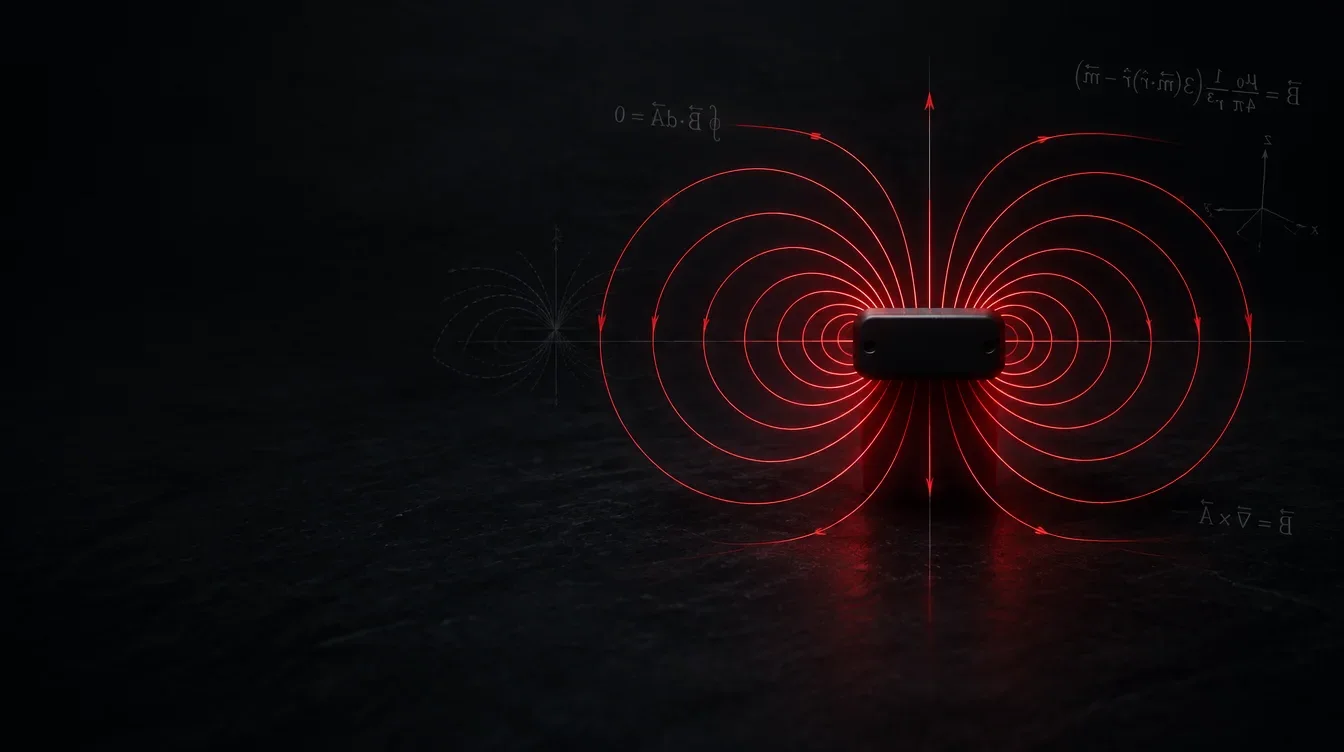
The volumetric magnetic field: a RuBee read passing straight through steel and concrete — no aiming, no line of sight.
RF: A Swiss Cheese of Nulls
Multi-path reflections create destructive-interference dead zones with zero signal strength. Delay Spread — the gap between the first signal arriving and the last reflection — quantifies the chaos. High Delay Spread means high nulls and read failures.
RuBee: Zero Delay Spread
Magnetic fields don't reflect. No multi-path, no nulls, no dead zones — a homogeneous, volumetric field where signal strength acts as a tape measure of distance to the tag. We call it Spatial Certainty.
Sculptable, Coherent Fields
RuBee fields are coherent: with phase-controlled base stations synchronized to the nanosecond, fields can be intentionally sculpted in 3D — cancelled on one side, doubled on the other, or made perfectly uniform across a room.
This is not theoretical. Visible has decades of read-time data from high-noise environments at remote sites worldwide backing the claim — and every Defense and Industrial customer holds RuBee to a 100% read rate requirement. Lightning can cost a single read for a second or two; the next read is back at 100%.
Safe for People. Safe on Explosives.
Invisible to Adversaries.
Human Safety
In 2006 the FDA classified IEEE 1902.1 as a Class 1, Non-Significant Risk device. Peer-reviewed Mayo Clinic studies show RuBee has no effect on pacemakers or ICDs, and no significant EMI/EMC in the operating room. A UHF RFID reader radiates about 4 watts; RuBee produces about 40 nanowatts — a quadrillion (10¹⁵) times less RF power. RFID requires OSHA warning signs at 23 inches and is banned from many hospitals; RuBee is roughly one million times below OSHA limits under IEEE C95.1.
Physical & Cyber Security
RuBee is the only wireless technology tested by the US Department of Energy and allowed in secure areas — Oak Ridge and Pantex among them. DOE concluded RuBee has no compromising emanations: the signal simply stops where the tag can no longer be read. No Tempest risk, no targeting risk, no eavesdropping.
Intrinsic Safety
The only wireless — tags, base stations, antennas, and handhelds — tested by the US Navy for HERO and found to have a zero Safe Separation Distance on unsafe-fused ordnance. Many RF vendors claim HERO-safe tags; their base stations still carry SSDs of 3–12 feet. RuBee is HERF ZERO on flammables — and the only wireless approved by the US DOE for use on nuclear weapons, about one million times below the danger level for C4. Encapsulated tags are certified ATEX Zone 0, IEC 60079-0 Class IIC, and NEC 501 Class 1 Div 1 (pure hydrogen/acetylene atmospheres) — and unlike RF vendors, the routers and ATLAS antennas meet the same standards, not just the tags.
HERO ZERO in practice: tagged equipment deployed with US Navy dive teams — zero Safe Separation Distance, proven in NAVSEA testing.
Radio dies in water. Magnetic fields don't — a RuBee tag reads underwater exactly as it does in air.
Why Secure Facilities Ban RF:
The Three Risks of Compromising Emanations
In secure facilities the rule is simple: no RF signal leaves or enters, even AES-256 encrypted. Cell phones, WiFi, RTLS, and RFID are banned — because every RF emission carries three risks. RuBee is magnetic, produces no compromising emanations, and is the only wireless approved in DOE secure areas.
1 · Eavesdropping Risk
Someone in the bushes a mile away can monitor facility activity. At DefCon 18, Chris Paget demonstrated covert RFID tag reads at 218 feet — and showed that because RFID obeys the Radar Range Equation, tags can be read from 80 miles away with the right equipment.
2 · Target Risk
Radio Direction Finding turns any emitter into a target: a 100 mW beacon has been detected 48 km away; a passive RFID tag on a weapon can be found from 500 feet with $1,000 of gear. Most RuBee tags have an RDF detection range under 20 feet — 10 feet at high-security sites.
3 · Tempest Risk
Any RF signal leaving a facility could carry a hidden microphone or camera feed. DOE sites run constant Technical Surveillance Countermeasures sweeps. With RuBee the question never arises: the signal simply does not exist beyond read range.
HERO context: there have been roughly 110 RF-linked explosive incidents in the US in a decade — the 1967 USS Forrestal fire is why the Navy’s HERO test program exists. By the Navy’s own SSD equations, a 4 W RFID base station needs ~8 feet of separation from ordnance; RuBee’s 0.9 nW works out to 0.03 mm — and in actual NAVSEA tests, zero.
The Physics, In Plain Terms
Everything unusual about RuBee — the security, the safety, the steel immunity — falls out of two pieces of very old physics: Maxwell's equations (1856) and Planck's law (1901).
Maxwell — Losing the Electric Field on Purpose
Every moving electron produces a linked pair: an electric field (E) and a magnetic field (H). In the "far field," they travel together as a radio wave, related by the impedance of free space — 377 ohms. But RuBee's 131 kHz signal has a wavelength of 7,509 feet, and tags are read at 10–50 feet — about 1/700th of a wavelength, the extreme near field. There, the 377-ohm relationship collapses: effective impedance drops below 0.00001 ohms, and E is effectively shorted out. What remains is almost purely magnetic — and magnetic photons are not stopped by steel or water.
A standard RuBee antenna produces ~600 mGauss; a tag ~50 mGauss. For scale, Earth's own magnetic field is 500–700 mGauss. RuBee doesn't even affect magnetic-stripe cards.
Planck — Why the Battery Lasts Decades
Planck's law says a photon's energy is proportional to its frequency. At 131 kHz, RuBee photons carry almost no energy — which is why tags run for decades on coin cells, why there are no EMI/EMC issues, why the technology is intrinsically safe around explosives, and why there are no known human safety concerns.
The same physics delivers the security story: RuBee signal strength falls off at 1/R³ versus RF's 1/R. An RF signal can be intercepted miles away. A RuBee signal sinks into deep-space noise just beyond its read range — there is nothing left to eavesdrop on.
Try It Yourself
1/R³ vs 1/R — Why Nobody Can Hear RuBee
Drag the slider to move an eavesdropper away from the tag. RF falls off at 1/R — still detectable miles out. RuBee falls off at 1/R³ — a million times fainter every 100× the distance, buried in noise just past its read range.
Watch: Aerospace 4.0 Factory
Harsh-environment proof: paint booths and factory automation, Aerospace 4.0.
Watch: Allegro on an M4
The physics applied: Allegro shot counting and waveform diagnostics, on-weapon.
Don't Take Our Word For It
Independent government and clinical documentation:
US DOE Pantex Auto-ID Report PDF
Five-year DOE study: RuBee approved for secure areas with 100% read rates; rated across security, safety and accuracy.
US Navy HERO Report PDF
Zero Safe Separation Distance on unsafe-fused ordnance — signed NAVSEA testing.
RuBee Security & Physics Paper PDF
IEEE conference paper: the physics behind real-time, high-security visibility networks. DOE testing found no compromising emanations.
FDA Classification & Mayo Clinic Studies
Class 1 NSR; no effect on pacemakers, ICDs, or operating-room equipment. All reports →