
Home / Tags & Components
Understanding the Hardware
Every Tag Is a Small Computer
With a Two-Way Magnetic Radio
This page is about how RuBee hardware works — what lives inside a tag, the form factors tags take, and how tags, antennas, routers, and software fit together into one network. Sample specifications are collected in a reference section at the end.
Inside a RuBee Tag
Transceiver, Not Transponder
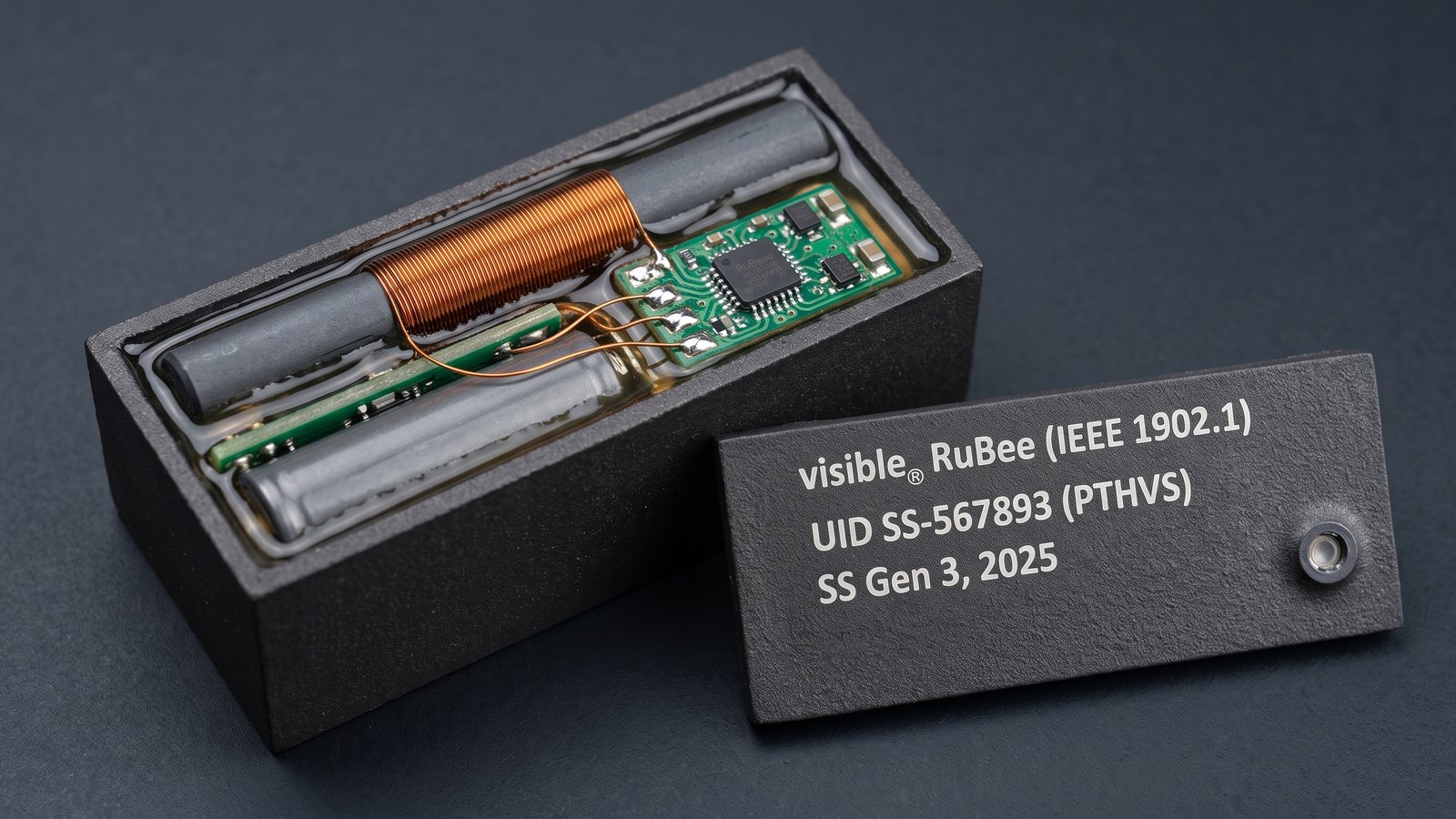
Every RFID tag — active or passive — is a transponder that reflects radio signals. A RuBee tag is a transceiver: a full network node that talks in packets over magnetic waves at 131 kHz. All of the integrated circuits are designed in-house — a RuBee modem chip paired with a 4-bit MCU, and for high-security work an ARM processor with 32K sRAM and 256K flash. With battery and antenna, a tag can be built the size of a dime and 1.5 mm thick.
A Tiny Server, Not a Label
Each tag has a 32-bit IP address, a 32-bit subnet address for asset classes (weapons, laptops, people), and a permanent 32-bit MAC ID — managed by sophisticated firmware.
Crystal Clock + Memory
512 bytes of static memory — 412 free for serials, model, owner — plus date/time registers, battery status, and sensor areas. Reduced-function xDot chips serve fixed-ID jobs.
Coin Cell, 5–25 Years
Tags are almost never awake: the RuBee chip listens for a reader at under 2 µA and the rest of the electronics are powered down between tasks. Industrial-grade lithium cells, epoxy-potted, and every tag’s sleep current measured before sealing. How →
Ferrite Antennas
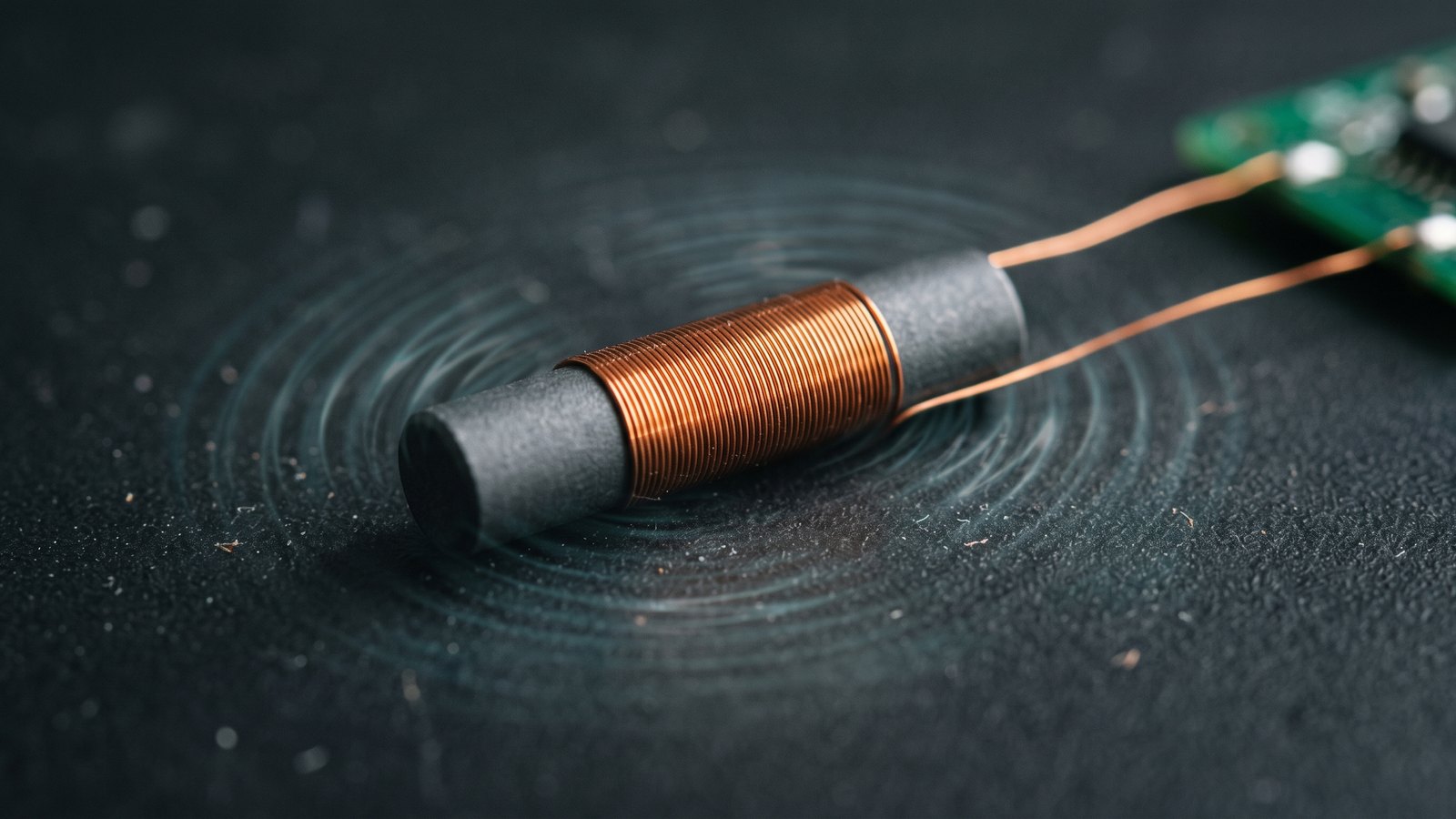
Ferrite rods wound with fine magnet wire generate and receive the magnetic field — steel immune, no de-tuning. Specialized antennas actually gain range when mounted on steel.
Always-On Sensors
A custom low-power state machine with adjustable-gain amplifier enables real-time acquisition — accelerometer, temperature, pressure, humidity. Tags on medical implants rode out hurricanes Katrina and Wilma still logging.
Security Built In
Read/write locks standard; AES optional; NIST FIPS 186-4 elliptic-curve authentication and tripwire options on specialized tags — the same crypto used on nuclear-warhead visibility.
One Chip Family, Many Shapes
Tag Form Factors
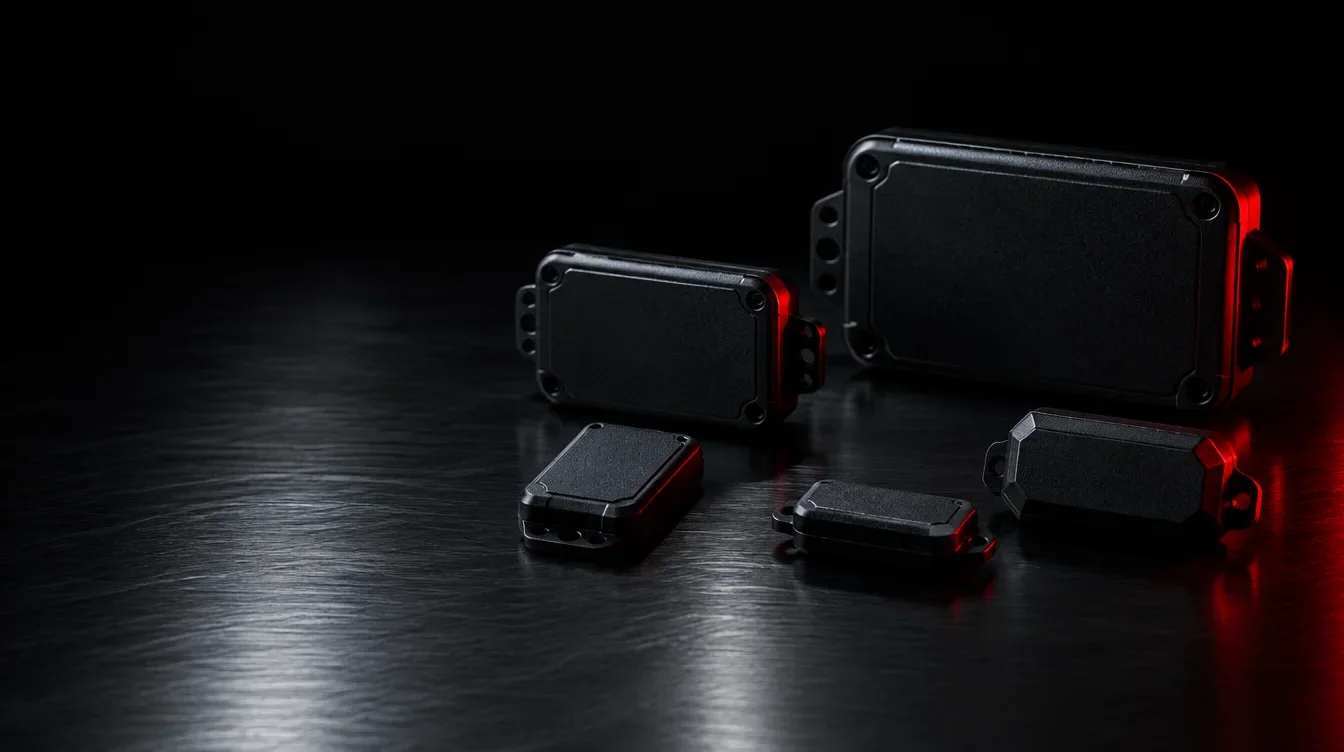
The same transceiver core is packaged for very different jobs. The Health Tag and four tag families cover most of what RuBee does in the field.
SuperSensor · TSS-A704
The RuBee® Health Tag
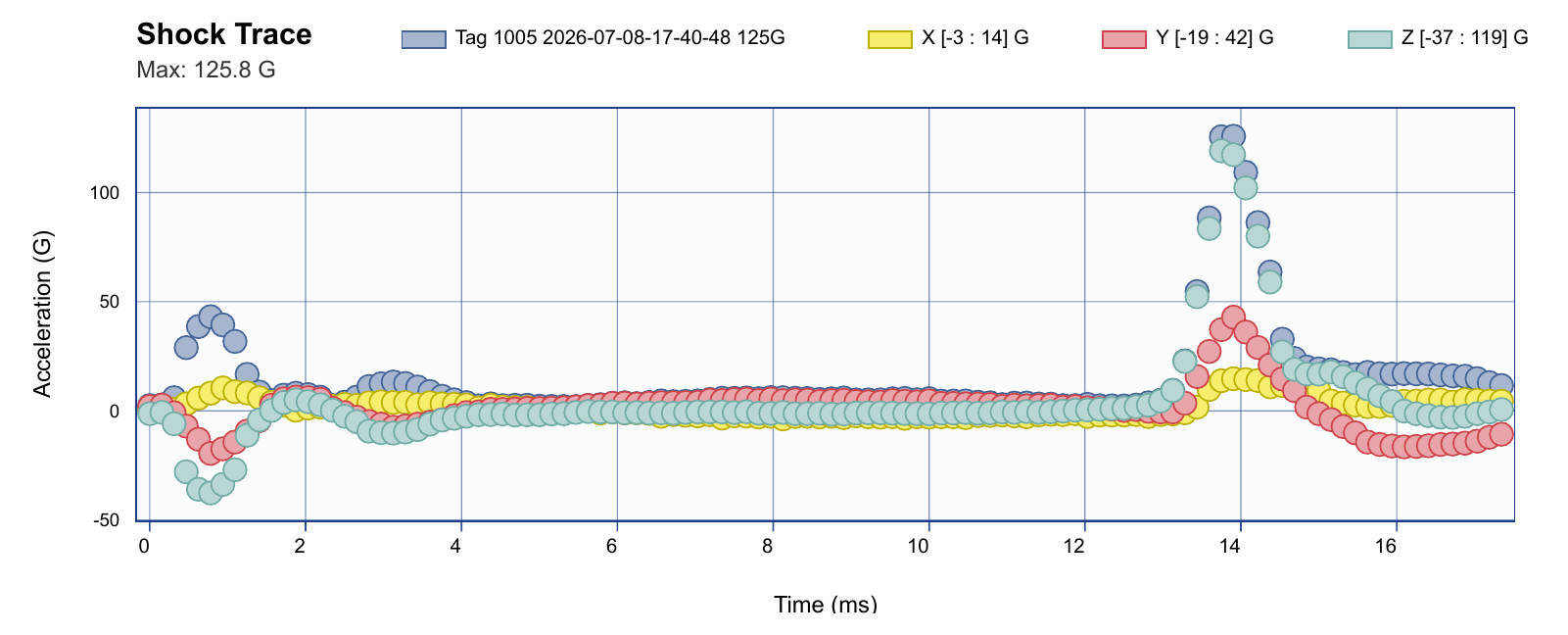
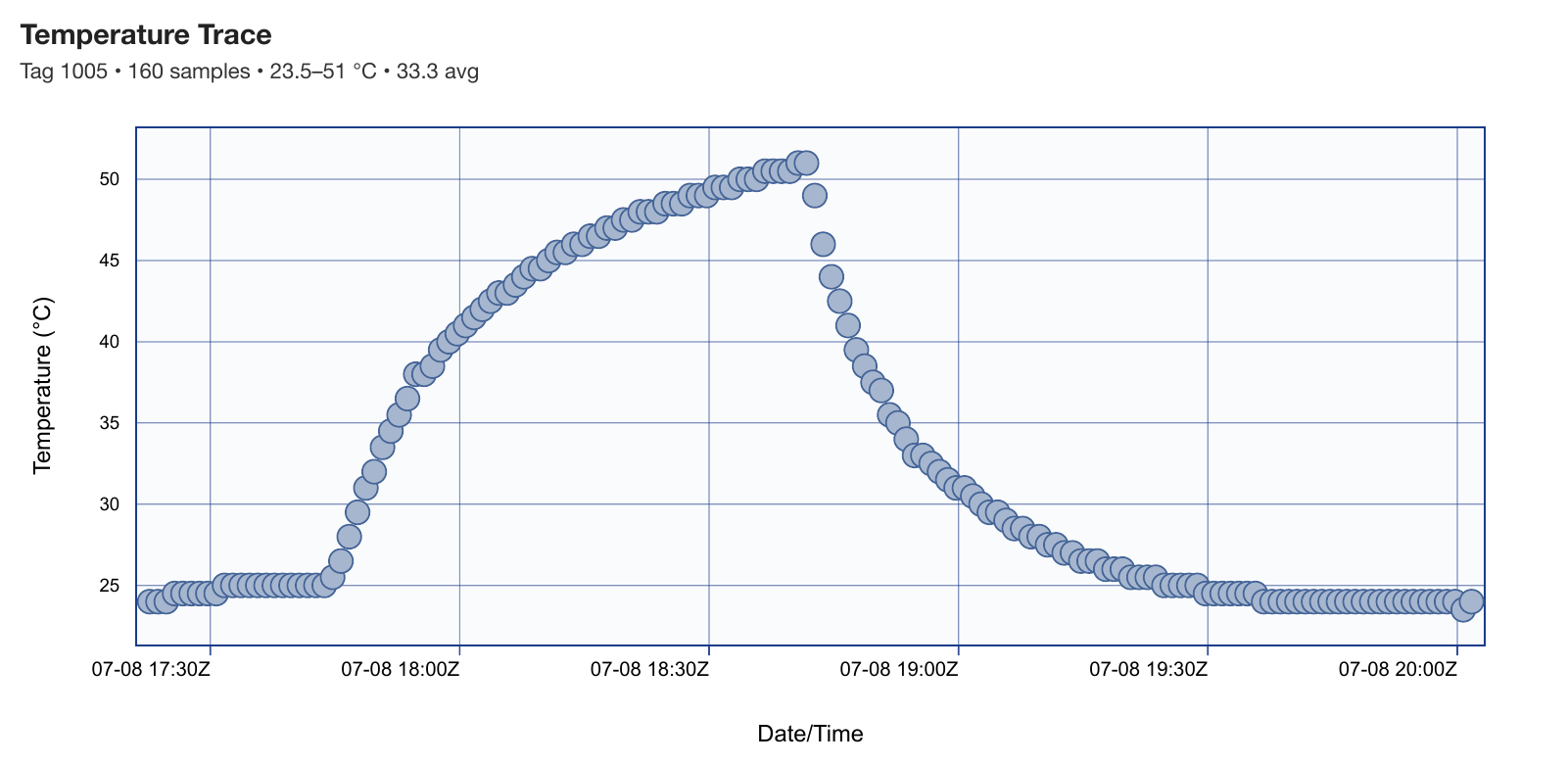
An asset tag that is also an instrument. Sealed to the asset for 15 or 25 years, it records the whole life of a sensitive item — every temperature, humidity and pressure excursion, every shock with its 3-axis trace, the cumulative vibration spectrum — and answers inventory scans through the closed case. Sensor Envoy reads a whole group of tags in one discovery, flags the ones that need attention, and generates the reports.
Six sensors
Temp −40…85 °C · RH 0–100% · 300–1200 mBar · shock 3-axis ±200 g · vibration ±16 g, PSD to 750 Hz · motion/tamper
On-tag memory
9.2K-event log · high & low-res histograms · 8 excursion traces per channel · 15 shock traces · USB download
Qualified
MIL-STD 810H · IP68 · HERO / HERF safe · ATEX Zone 0, UL Class I Div I · no compromising emanations
Workflow: Asset Group → Discover → Read by tier → Report
Name a case or container once. Each discovery session reads every tag in the group through the case in seconds (Red Flags, then detail on demand), compares it with the last session, and produces PDF reports for people and JSON for systems — automatically.

Weapon Tags
Purpose-built for specific platforms: snap-fit tags for Glock Gen 4/5, grip inserts for the SIG M18, receiver tags for AR-pattern rifles. Sealed to MIL-STD 810H, waterproof, solvent proof — washable in acetone in an ultrasonic bath with the firearm. These are the tags on the racks at Armory 20/20 sites.

Shot-Counter (Sensor) Tags
The tag becomes an instrument: a NIST-traceable accelerometer and custom waveform processor capture the Impulse Response Function of every shot — the weapon’s EKG. Grip, surface-mount, barrel-handle, and rail form factors, with batteries to 20 years. The physics is on the Allegro 20/20 page.
People & Asset Tags
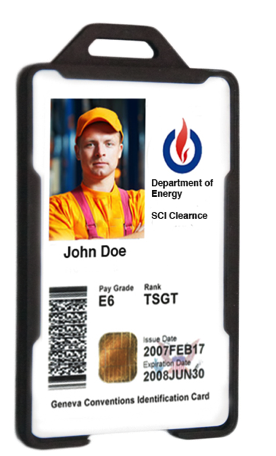
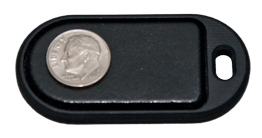
CAC-card holder badges (vertical and horizontal), key-chain dongles, and thin adhesive tags for cell phones and laptops — the tags behind DoorGuard’s exit/entry detection. Read in a pocket, purse, or wallet, at any angle, through people and steel. Adhesive asset tags fit anything that moves, from radios to shipping containers.
How It All Works Together
The RuBee System
Eight years of Defense and Industrial IoT field experience, integrated into one stack — and one company taking responsibility for all of it. We are not “hardware agnostic”; we are RuBee committed. We manufacture and make it all work as a system, responsible for both the first 20 feet and the last 20 feet. That’s why we call our apps 20/20.
01 · Tags
Tiny packet-based servers with IP, subnet, and MAC addresses, sensors, and firmware managing local data intelligently.
02 · Routers + RedFin
Linux routers running RedFin firmware: ~15 tag instructions exposed as simple JSON calls, binary-search tag discovery, automatic database sync.
03 · Dot-Tag Edgeware
AccuAudit IO blockchain audit database, diagnostics, 21 CFR Part 11 audit records, raw data export, firmware updates.
04 · RuBee IO Platform
The application platform: a new Internet of Things application in 1,000–2,000 lines of code.
05 · 20/20 Apps
Armories, explosive stores, missiles and aircraft assembly, people management — plus Topaz countrywide dashboards.
The Hardware Around the Tag
Between a tag and its 20/20 application sit three kinds of hardware, each with one job.

Routers
The Sidewinder is the workhorse: four antenna ports, Linux, a VPN manager, and RedFin firmware keeping every tag’s status synced to the Dot-Tag database. Rugged variants (SWAT, ATEX Zone 2) go to explosive sites, and the same routers drive the phase-synchronized antennas at doors and gates.

Antennas
Antennas sculpt the reading volume: ferrite rods on racks, wire loops in floors and ceilings up to 20 × 20 ft, three-axis zPods and zGates at portals, and the big carbon-jacketed ATLAS loops (8 × 25 ft, zero RF emissions, ATEX Zone 1) over explosive bays. Mounted on steel, they read better.

Readers & Handhelds
The MiniCom plugs into any laptop by USB with a range dialable from 1 inch to 10 feet — commissioning, spot inventory, sensor downloads. Rugged tablets carry the 20/20 apps and Sensor Envoy into the field, including Amber radio-silent battlefield mode.
For Reference
Sample Specifications
Representative numbers from the engineering catalog, for readers who want the details. Every tag is designed for a specific application — contact Visible for current options.
Datasheets & Product Cards