
Home / Tags & Components
Understanding the Hardware
Every Tag Is a Small Computer
With a Two-Way Magnetic Radio
This page is about how RuBee hardware works — what lives inside a tag, the form factors tags take, and how tags, antennas, routers, and software fit together into one network. Sample specifications are collected in a reference section at the end.
Inside a RuBee Tag
Transceiver, Not Transponder
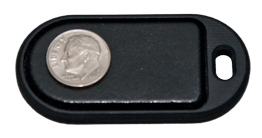
Every RFID tag — active or passive — is a transponder that reflects radio signals. A RuBee tag is a transceiver: a full network node that talks in packets over magnetic waves at 131 kHz. All of the integrated circuits are designed in-house — a RuBee modem chip paired with a 4-bit MCU, and for high-security work an ARM processor with 32K sRAM and 256K flash. With battery and antenna, a tag can be built the size of a dime and 1.5 mm thick.
A Tiny Server, Not a Label
Each tag has a 32-bit IP address, a 32-bit subnet address for asset classes (weapons, laptops, people), and a permanent 32-bit MAC ID — managed by sophisticated firmware.
Crystal Clock + Memory
512 bytes of static memory — 412 free for serials, model, owner — plus date/time registers, battery status, and sensor areas. Reduced-function xDot chips serve fixed-ID jobs.
Coin Cell, 5–25 Years
131 kHz sips power. Tags sleep, waking 5–10 times a second for a few milliseconds to listen. Military-grade encapsulated lithium cells guarantee 25 years.
Ferrite Antennas
Single or dual ferrite cores generate and receive magnetic fields — steel immune, no de-tuning. Specialized antennas actually gain range when mounted on steel.
Always-On Sensors
A custom low-power state machine with adjustable-gain amplifier enables real-time acquisition — accelerometer, temperature, pressure, humidity. Tags on medical implants rode out hurricanes Katrina and Wilma still logging.
Security Built In
Read/write locks standard; AES optional; NIST FIPS 186-4 elliptic-curve authentication and tripwire options on specialized tags — the same crypto used on nuclear-warhead visibility.
One Chip Family, Many Shapes
Tag Form Factors
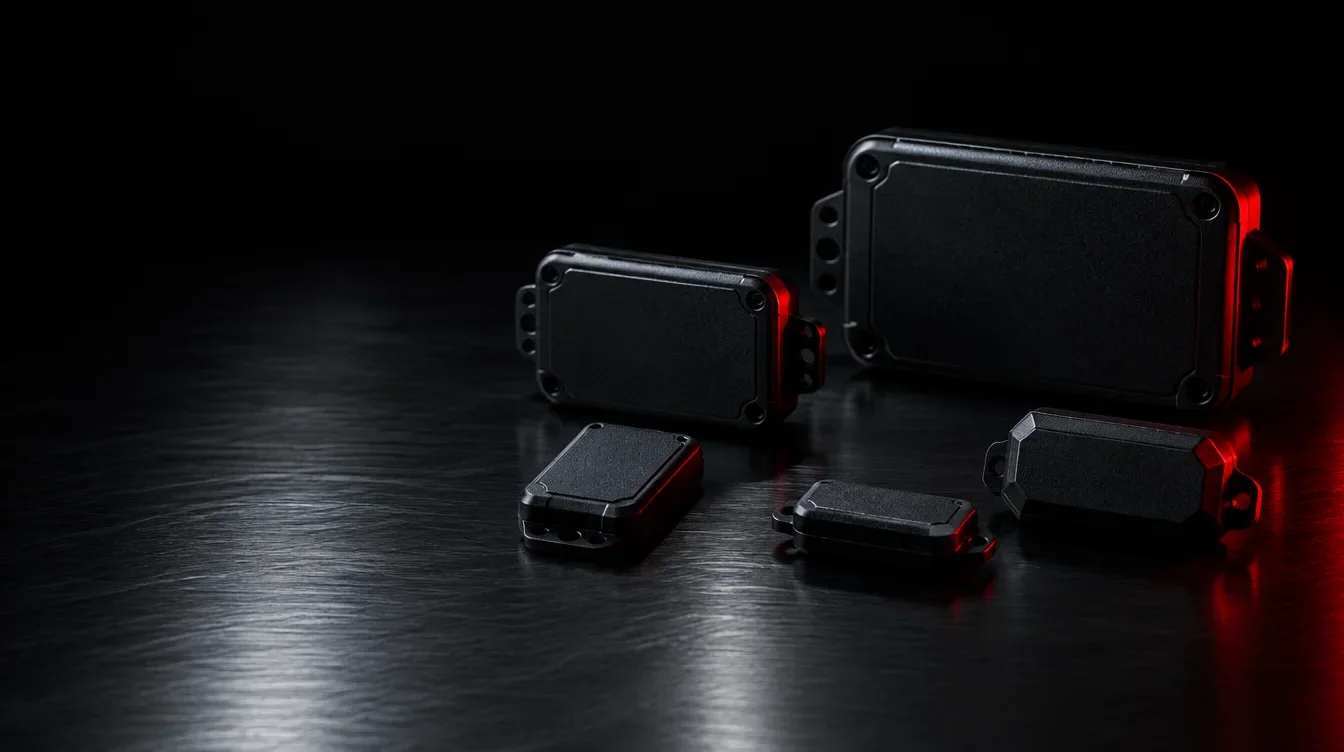
The same transceiver core is packaged for very different jobs. Four families cover most of what RuBee does in the field.

Weapon Tags
Purpose-built for specific platforms: snap-fit tags for Glock Gen 4/5, grip inserts for the SIG M18, receiver tags for AR-pattern rifles. Sealed to MIL-STD 810H, waterproof, solvent proof — washable in acetone in an ultrasonic bath with the firearm. These are the tags on the racks at Armory 20/20 sites.

Shot-Counter (Sensor) Tags
The tag becomes an instrument: a NIST-traceable accelerometer and custom waveform processor capture the Impulse Response Function of every shot — the weapon’s EKG. Grip, surface-mount, barrel-handle, and rail form factors, with batteries to 20 years. The physics is on the Allegro 20/20 page.
People & Asset Tags
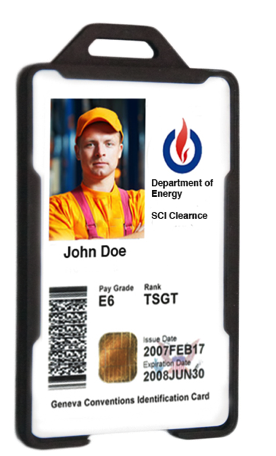
CAC-card holder badges (vertical and horizontal), key-chain dongles, and thin adhesive tags for cell phones and laptops — the tags behind DoorGuard’s exit/entry detection. Read in a pocket, purse, or wallet, at any angle, through people and steel. Adhesive asset tags fit anything that moves, from radios to shipping containers.
The Super Sensor
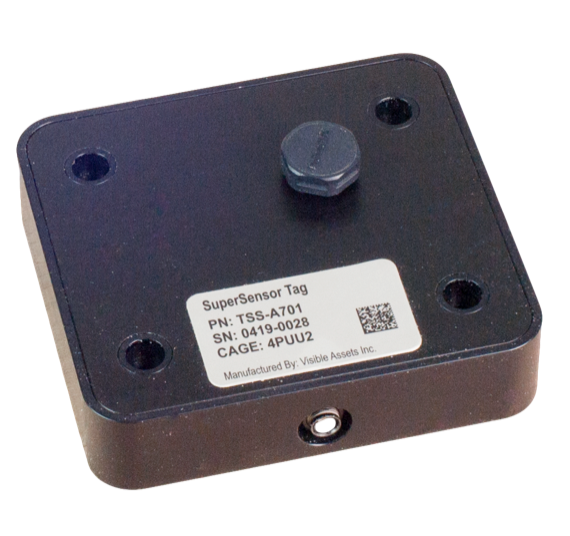
The flagship: aluminum case with a PEKK top, five calibrated sensors (±200 g accelerometer, temperature, pressure, humidity, three-level vibration), 32K sRAM + 275K flash, a 20-year battery, and NIST 186-4 elliptic-curve authentication. This is the sensor platform inside Store 20/20 and ATLAS explosive-stores monitoring.
How It All Works Together
The RuBee Ecosystem
Eight years of Defense and Industrial IoT field experience, integrated into one stack — and one company taking responsibility for all of it. We are not “hardware agnostic”; we are RuBee committed. We manufacture and make it all work as a system, responsible for both the first 20 feet and the last 20 feet. That’s why we call our apps 20/20.
01 · Tags
Tiny packet-based servers with IP, subnet, and MAC addresses, sensors, and firmware managing local data intelligently.
02 · Routers + BlueFin
Linux routers running BlueFin firmware: ~15 tag instructions exposed as simple JSON calls, binary-search tag discovery, automatic database sync.
03 · Dot-Tag Edgeware
AccuAudit IO blockchain audit database, diagnostics, 21 CFR Part 11 audit records, raw data export, firmware updates.
04 · RuBee IO Platform
The application platform: a new Internet of Things application in 1,000–2,000 lines of code.
05 · 20/20 Apps
Armories, explosive stores, missiles and aircraft assembly, people management — plus Topaz countrywide dashboards.
The Hardware Around the Tag
Between a tag and its 20/20 application sit three kinds of hardware, each with one job.

Routers
The Sidewinder is the workhorse: four antenna ports, Linux, a VPN manager, and BlueFin firmware keeping every tag’s status synced to the Dot-Tag database. Rugged variants (SWAT, ATEX Zone 2) go to explosive sites; the RP2 Portal Platform drives up to 20 phase-synchronized antennas at doors and gates.

Antennas
Antennas sculpt the reading volume: ferrite rods on racks, wire loops in floors and ceilings up to 20 × 20 ft, three-axis zPods and zGates at portals, and the big carbon-jacketed ATLAS loops (8 × 25 ft, zero RF emissions, ATEX Zone 1) over explosive bays. Mounted on steel, they read better.

Readers & Handhelds
The MiniCom plugs into any laptop by USB with a range dialable from 1 inch to 10 feet — commissioning, spot inventory, sensor downloads. The MIL-STD 810G Javelin handheld and rugged tablets carry the 20/20 apps into the field, including Amber radio-silent battlefield mode.
For Reference
Sample Specifications
Representative numbers from the engineering catalog, for readers who want the details. Every tag is designed for a specific application — contact Visible for current options. Terms are defined in the glossary.
What do tags cost? In high volumes (~2 million) an ID-only tag with a one-year battery can be around $6. Typical tags without special security run $15–35; tags with CPU, subnets, memory and security $50–125; specialized calibrated-sensor tags with advanced waveform firmware, tripwire, and 20-year batteries reach $5,000. Non-US customers always receive US Government pricing.
Reading the Specs
Glossary
Dimensions
Size in inches.
Antennas
Type of antenna — determines sensitivity to de-tuning near steel, and range.
Environmental
Tag materials and potting determine immunity to solvents and waterproofing.
Reads/Writes
Number of two-way reads and writes before the battery dies.
Co-Planar Range
Expected range when Rx/Tx antennas are co-planar. Small tags 6–10 ft, medium 10–30 ft; maximum range is 50 ft.
Rx On
Time a tag can stay in receive-active state. Tags normally sleep, waking 5–10 times per second for a few milliseconds.
Normal Use Battery Life
Expected battery life in normal use.
Optional Sensors
Sensors that can be added to a tag.
Security Options
Basic option is read and write lock — prevention of exit/entry changes. Optional AES encryption; some specialized tags have public/private-key authentication.
Memory Options
Static read/write memory sizes.
Attachment
How the tag is mechanically attached to a person or asset.
HERO / HERF SSD 0″
Zero Safe Separation Distance on fused ordnance (HERO) and flammables (HERF) — safe directly on explosives.
BlueFin
The resident data-manager firmware in every RuBee router — tag transactions as simple JSON calls over the network.
Dot-Tag / RuBee IO
The edgeware and application platform that virtualize a tag network into a real-time database and web application.
Datasheets & Product Cards